
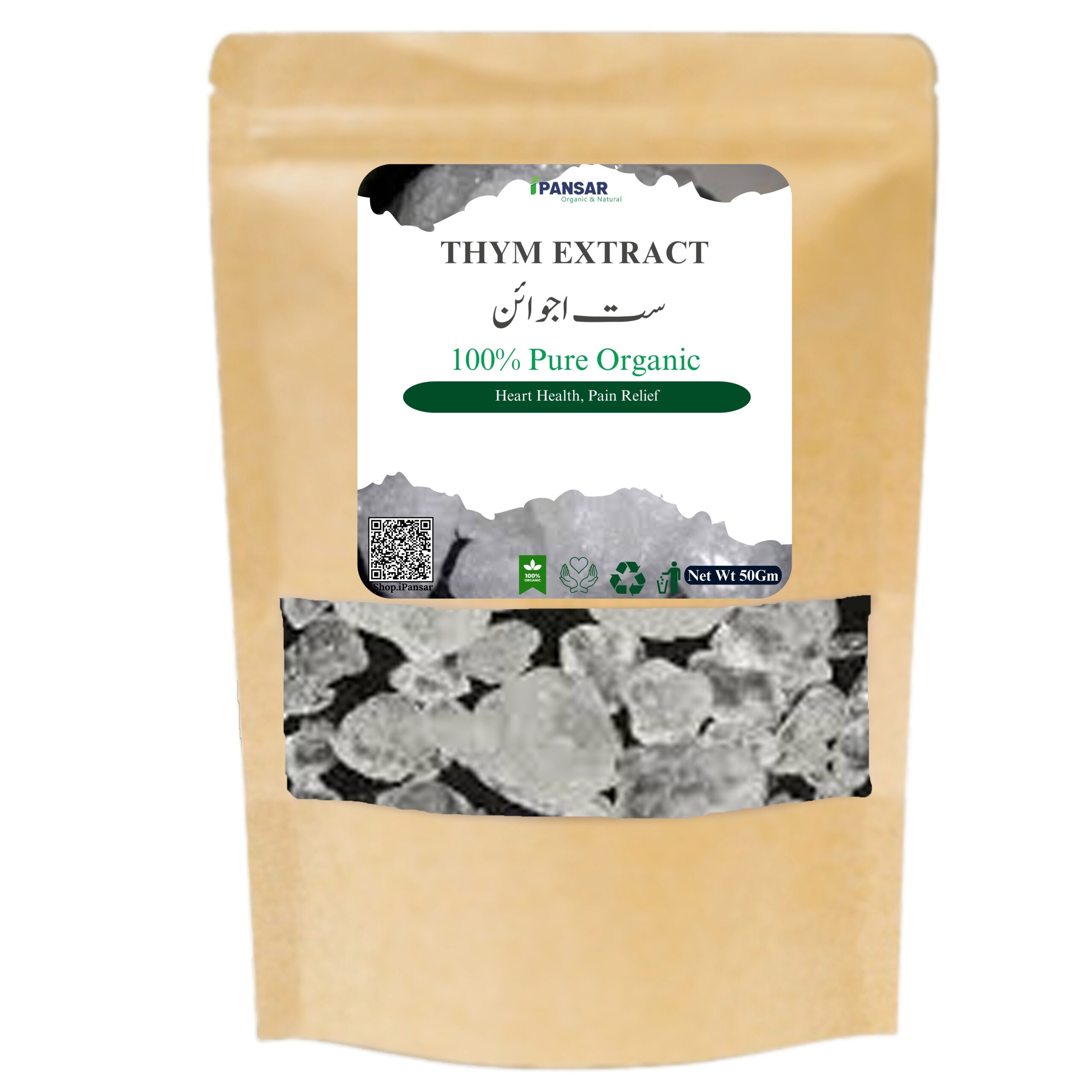

Sat Ajwain is the most powerful organic extract for providing immediate relief from digestive distress and respiratory congestion. Also known as Thymol Crystals, it is a strong pillar of traditional first-aid kits for its proven ability to act as a potent antiseptic and carminative. Our Sat Ajwain provides the best crystalline purity for proven effectiveness in neutralizing stomach gas and clearing the chest. Using these organic crystals is the ultimate way to support a strong immune response and maintain instant digestive comfort.
To achieve the perfect home remedy for digestion, you can buy our Sat Ajwain and pair it with our Ajwain Desi Seeds for a proven and strong herbal combination.
If you are looking for an incredible organic alternative to synthetic vapor rubs, Sat Ajwain is the best choice. It is a proven way to manage tooth sensitivity and provide a powerful boost to your body’s natural defense against seasonal microbes. Whether you use Sat Ajwain for steam inhalation or as an essential aid for abdominal pain, this ultimate selection from our ipansar collection is the strong foundation your health deserves.
1. Strong Relief for Severe Gastric Pain
This crystal is most famous for its ability to dissolve gas almost instantly. As a strong carminative, Sat Ajwain is proven to help the body settle an upset stomach and stop cramps. This powerful action makes it the best organic choice for maintaining a strong digestive system.
2. Powerful Respiratory Clarity
Our high-quality Sat Ajwain is an incredible tool for clearing blocked sinuses. It possesses strong decongestant properties that help in the proven loosening of phlegm during steam inhalation. This powerful action is effective in promoting easy breathing naturally.
3. Incredible Treatment for Toothache
Rich in natural numbing agents, this extract acts as a strong local anesthetic. Every tiny crystal of Sat Ajwain is proven to reduce dental pain and fight gum bacteria. This powerful action is essential for a strong and pain-free mouth through ipansar quality.
4. Natural Antiseptic for Skin and Wounds
The antimicrobial nature of these crystals is a strong ally against infections. It is proven that Sat Ajwain helps in the effective cleaning of minor cuts or fungal skin issues. This powerful profile is essential for keeping your skin strong and protected.
5. Relief for Common Cold and Flu
Our organic extract provides strong benefits during seasonal changes by acting as a natural germicide. It is proven to be effective in reducing the duration of a cold. This powerful property makes Sat Ajwain an essential for year-round immunity.
6. Incredible Insect Repellent and Home Hygiene
This extract is considered a strong natural deterrent for household pests. It is proven to help keep the environment clean from microbes when used in tiny amounts. This powerful nutritional profile is effective in protecting your living space and staying strong.
7. Strong Management of Muscle Pain
Sat Ajwain acts as a strong warming agent when mixed with carrier oils. It is proven to be effective in soothing joint aches and sore muscles. Using this extract is an essential way to maintain strong physical mobility.
8. Immunity and Gut Health
This herbal aid reflects on your overall health by creating a strong defense against intestinal parasites. Its powerful properties are proven to cleanse the gut environment. This effective action is essential for a strong immune response, ensuring your health remains incredible.
🥣 How to Use for Best Results
To fully experience the ultimate benefits of Sat Ajwain, follow these best practices:
For Gas: Dissolve a tiny grain (poppy seed size) in warm water and drink for powerful relief.
For Cold: Add a crystal to a bowl of hot water and inhale the steam for an effective and strong airway.
Consistency: Use only as needed due to its proven high concentration.
Quality Standards at ipansar
At ipansar, we ensure our products meet the best standards:
100% Pure Thymol: Natural steam-distilled crystals with no synthetic camphor or menthol.
Potency: Our crystals are air-tight packed for proven long-lasting aroma.
For objective research on the medicinal uses of Thymol, visit: https://www.ncbi.nlm.nih.gov/pmc/articles/PMC5448458/


Reviews
There are no reviews yet.